
Where Do You Start When Furnishing a Room or a Home?
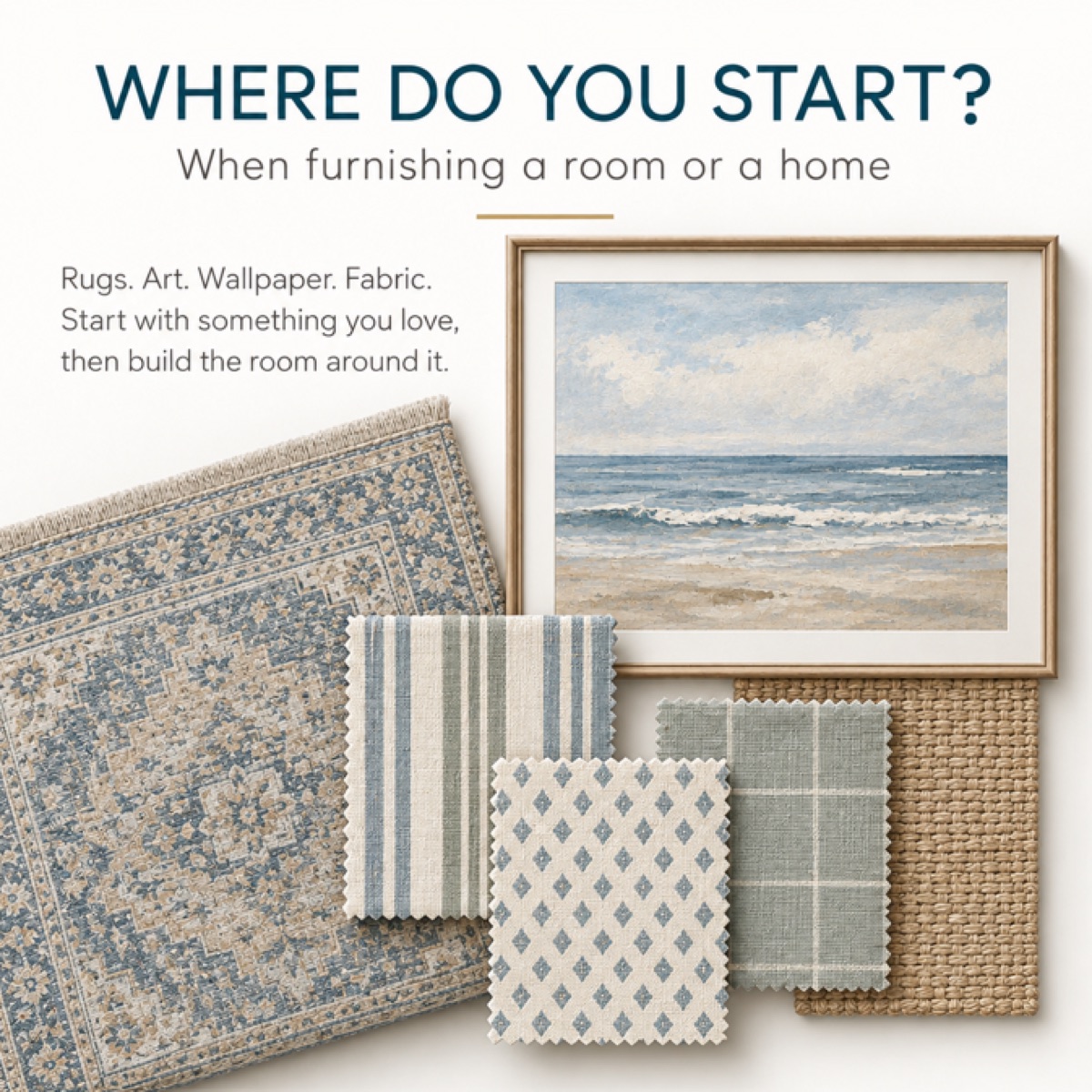
One of the most common questions I hear when someone is furnishing a room is: what comes first?
The rug? The artwork? The wallpaper? The fabric?
The answer is yes.
Any one of those can be the starting point for a room. The better question is: what do you love enough to build the room around?
Assuming you want some color or pattern in the space, start by deciding where you want that personality to come from. Maybe it is a beautiful piece of art. Maybe it is a floral wallpaper you cannot stop thinking about. Maybe it is a fabric you fell in love with and want on a pair of swivel chairs. Or maybe it is a traditional or Oushak-style rug that immediately gives the room its character.
There is no rule that says one category always has to come first. But there is a practical order that can make the rest of the design process much easier.
Start With the Hardest Thing to Find
When I am putting together a room, I usually think about which item will be the most difficult to replace.
Fabrics are generally easier to find than statement rugs or original artwork. There are thousands of upholstery and drapery fabrics available in every imaginable shade of blue, green, coral, beige and cream.
A rug can be much more limiting.
If you want a patterned rug, especially a traditional, Persian-inspired or Oushak design, you may be working within a very specific size, color palette and budget. Suddenly your choices become much narrower.
But rugs are not the only category that can be hard to source. Sometimes the hardest thing to find is a furniture piece that sets the tone for the whole room.
I am currently working with a client who has a large collection of Japanese art that she acquired while living overseas. She wanted to incorporate those pieces into a bedroom with a British Colonial feel. Two of the key furniture pieces she needed were an armoire and a secretary desk, both of which are much harder to find today, especially in a style that works with that collected, layered look.
In that room, we started with the hardest pieces first. We spent time scouring vintage finds from Chairish and other resellers, looking for pieces that could bridge her Japanese art collection with the British Colonial direction we were hoping to achieve. Once she found the right Asian-style armoire, that became the anchor for the room.
From there, it was much easier to make the next decisions. After the armoire and secretary desk were selected, we were able to choose the finish for the bed, which was important because the British Colonial style bed came in more than a dozen finish options.
Finally, we selected the rug to work with the furniture and tie everything together.
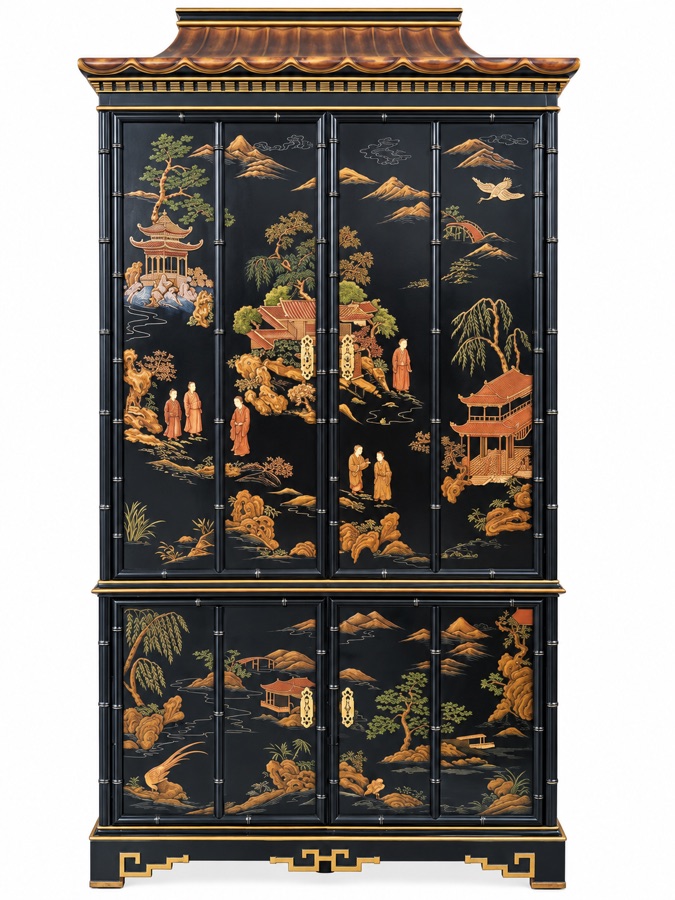
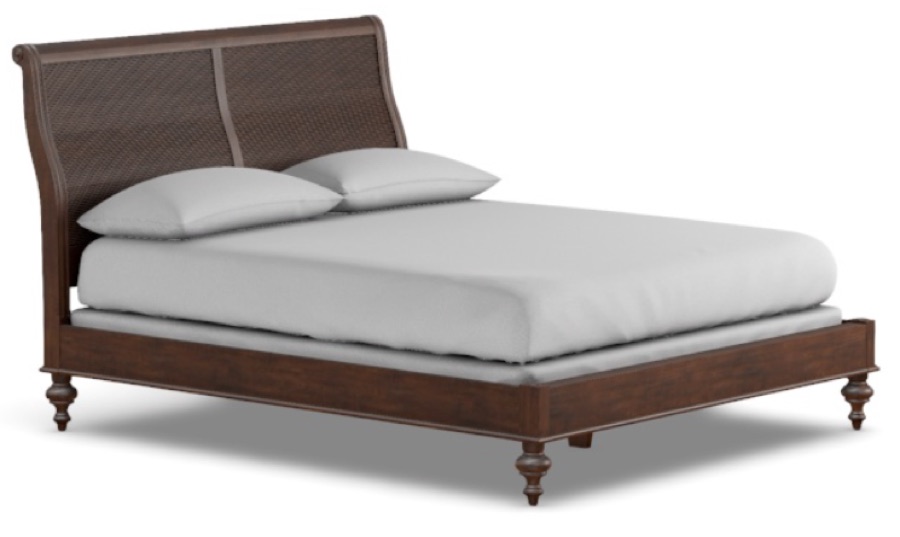
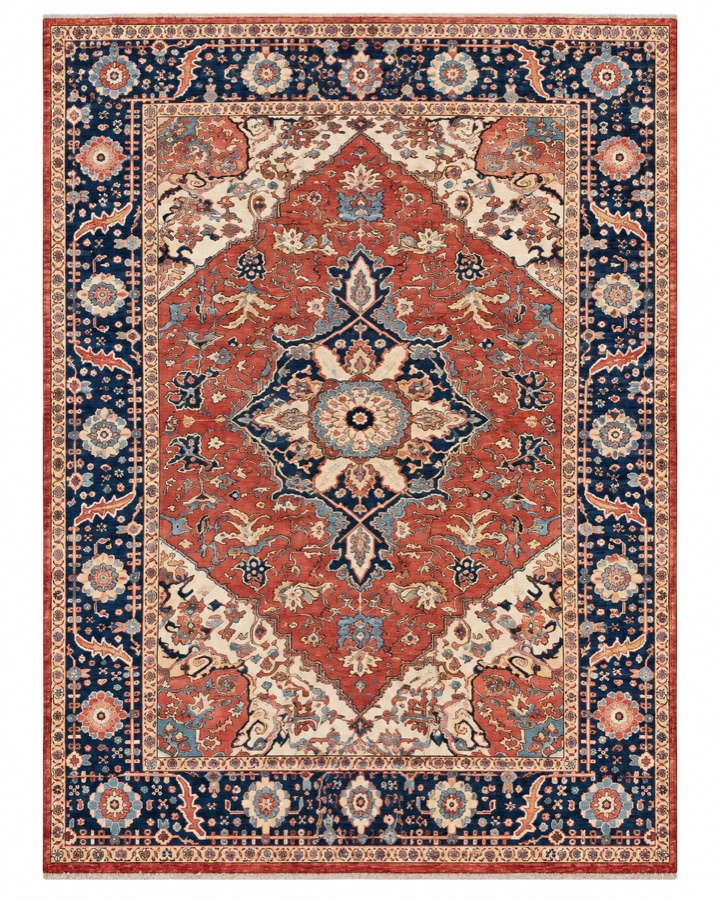
That is a perfect example of why it helps to identify the most difficult or most defining pieces first. Once those are in place, the rest of the room tends to fall into line more naturally.
That is why I often recommend choosing the hardest-to-find item early when you know it will help define the room.
If you decorate the entire room first, select your upholstery, choose your pillows and finalize all your prints and patterns, you can end up searching for one piece that somehow coordinates with everything you have already selected.
That is much harder than starting with the key piece and pulling the rest of the room together around it.
When the Rug Should Come First
A patterned rug can give you an instant roadmap.
If the rug has navy, rust, cream, olive and touches of gold, you suddenly have several directions you can take the room. The sofa may stay quiet and neutral while a chair picks up the blue. Pillows can introduce a small amount of rust or green. Artwork does not need to match the rug exactly, but it can repeat one or two of those tones.
You are not trying to make everything match. You are creating a relationship between the pieces.
Budget matters here too. If you have $2,000 to spend on a large rug instead of $10,000, your options are naturally going to be more limited. It makes sense to find the rug that gives you the look you want first, then build around it.
It is much easier to find a fabric that works with a rug than to find the perfect rug after every other pattern in the room has already been selected.
But a Neutral Rug Changes the Equation
If you already know that you want a neutral jute, sisal-look rug or a simple neutral wool rug, there is much less urgency.
There are plenty of good neutral rugs available at reasonable price points, so the rug does not need to drive the room.
In that case, I am perfectly comfortable starting with fabric, wallpaper or artwork instead.
A neutral rug becomes the foundation rather than the focal point.
This is one reason I use jute and neutral rugs so often. They give you tremendous flexibility. You can layer in bold fabrics, colorful artwork or patterned wallpaper without worrying that the rug is competing with everything else.
Starting With Art
A great piece of artwork can be one of the easiest and most natural starting points for a room.
Maybe you already own a painting you love. Maybe you find a large marsh landscape with soft blues, creams and muted greens that feels perfect for your home.
Instead of waiting until the room is almost finished and then trying to find artwork that works with everything else, turn the process around.
Start with the art.
Pull inspiration from it without copying it literally. A pale blue in the painting might influence a pair of chairs. A soft mossy green could appear in a pillow or lamp. The warmer neutral tones might help guide the wood finishes.
The room begins to feel connected without looking overly coordinated.
This is especially helpful when the artwork is large enough to become one of the primary focal points in the room.
Starting With Wallpaper
Wallpaper can completely establish the personality of a space.
A floral can push a room more traditional. A geometric can make it feel crisper and more tailored. A block print can add a collected, coastal feel without looking overtly beachy.
If you fall in love with a wallpaper, let it lead.
Choose your paint colors, fabrics and even your rug after you know exactly what colors are in the paper.
This is particularly important with patterned wallpaper because the colors you see online can be very different from the actual sample. A blue may lean aqua. A green may be more sage than grass green. A cream background may actually be much warmer than you expected.
Always get the sample first.
Once the wallpaper is established, it becomes much easier to choose the rest of the palette.
Starting With Fabric
Sometimes the whole room begins with one fabric.
It may be a large floral you want on a swivel chair, a stripe for drapery panels or a small block print you want to use on pillows.
There is absolutely nothing wrong with falling in love with the fabric first.
In fact, upholstery fabrics can be a wonderful jumping-off point because they often contain several colors that can be carried into other parts of the room.
The key is to decide whether that fabric is going to be the star or part of the supporting cast.
If you use a bold floral on two chairs, for example, you may want the sofa and rug to be quieter. If the sofa is covered in a strong stripe, you might choose smaller-scale prints elsewhere.
A room needs variety in pattern scale just as much as it needs variety in color.
You do not want every pattern to be the same size or intensity.
Pattern Scale Matters
This is one of the areas that can make a room feel polished instead of busy.
If you are using more than one pattern, vary the scale.
A large floral can work beautifully with a smaller geometric. A stripe can pair with a block print. A bold patterned rug can work with a quieter upholstery fabric.
What usually does not work is using five patterns that are all equally large and equally busy.
Think about creating a hierarchy.
One pattern can lead. Another can support it. A third may be used only in a small dose.
The eye needs somewhere to rest.
Do Not Make Everything the Star
A good room does not need five competing focal points.
Usually there is one element that leads and the rest supports it.
Maybe the rug is the star and the upholstery is quieter.
Maybe the wallpaper is bold and the rug is neutral.
Maybe the artwork provides the color while the rest of the room stays soft.
Maybe the chairs carry the strongest pattern while the sofa remains solid.
The room can still be layered and interesting. It just does not need every surface competing for attention.
What If You Are Furnishing an Entire House?
When you are furnishing a whole home, you do not have to choose the same starting point in every room.
The living room may begin with a rug.
The dining room may begin with wallpaper.
The primary bedroom may start with a fabric.
A hallway may be built around artwork you already own.
What should remain consistent is the broader color story.
If you love blues and greens, those colors can move through the house in different proportions. One room might lean heavily blue. Another might use mostly cream and green. Another might introduce coral, rust or gold.
Repeating a few colors, wood tones, metals or materials from room to room makes the home feel connected without making every room look the same.
Do Not Leave the Most Difficult Pieces Until the End
One of the biggest mistakes I see is leaving the hardest items until last.
People will sometimes completely furnish a room and then say, “Now I just need the rug and artwork.”
Unfortunately, those are often two of the pieces with the fewest perfect options.
If you already know you want a very specific rug, artwork, wallpaper or furniture piece, address it early.
Once those harder choices are established, finding a cream sofa, a blue chair, a brass lamp, a neutral drapery fabric or a simple side table is usually much easier.
Start With Something You Love
That is really the entire point.
A room is easier to design when it begins with something you genuinely love rather than a vague idea that everything needs to “go.”
Pick the piece that makes you excited about the room. Then look at its colors, scale, style and mood and let those details guide the next decision.
You do not need to know exactly what the finished room will look like on day one.
You just need a good place to start.
If you are furnishing a home and want help deciding where to start, Bluff & Bay Interiors offers interior design, styling and sourcing throughout Bluffton, Hilton Head, Beaufort, Savannah and the surrounding Lowcountry.