
The Nancy Meyers Aesthetic: How to Create a Coastal Home Without the Coastal Cliches
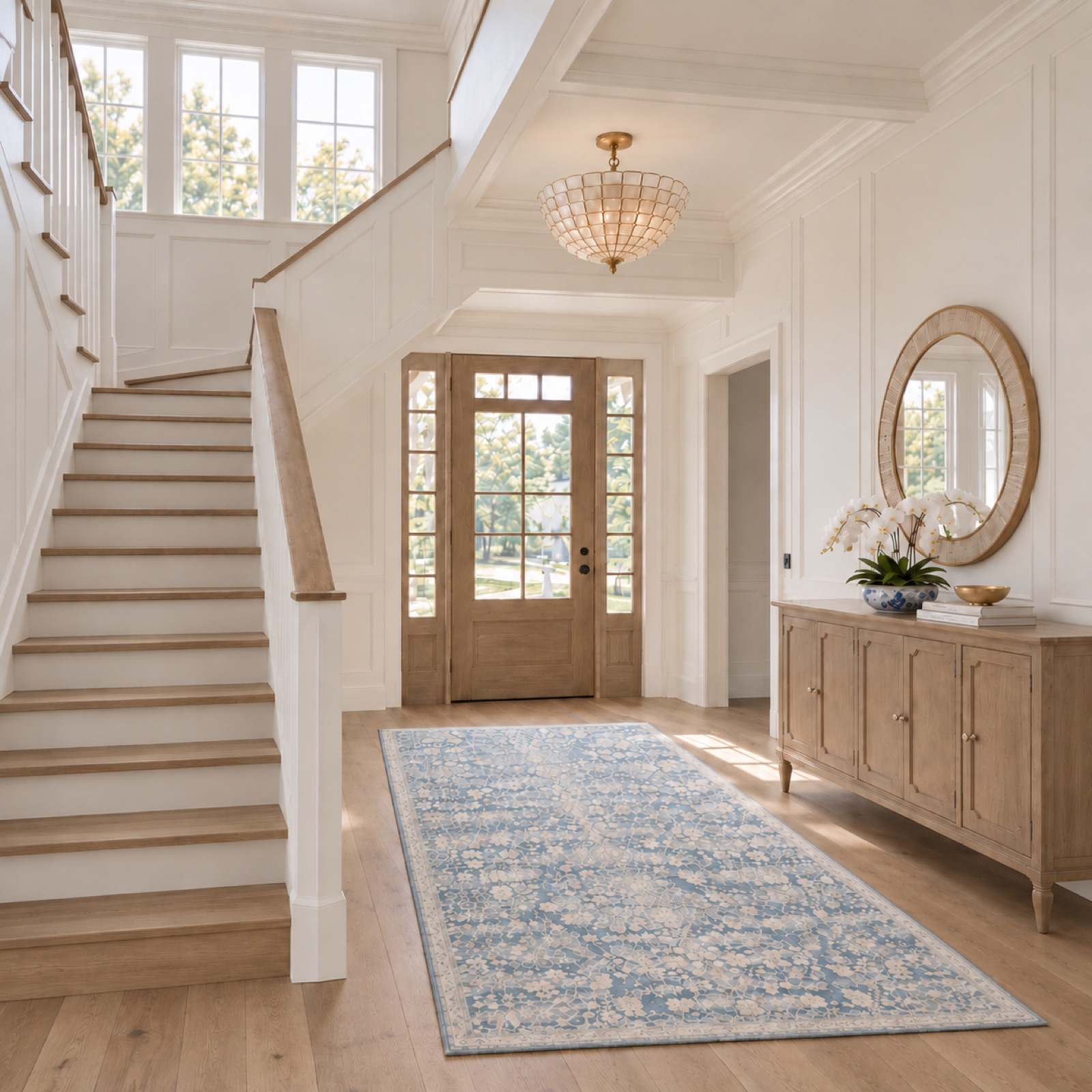
There is a certain kind of home that immediately feels comfortable, polished and timeless. It is beautiful, but it does not look overly decorated. It feels collected rather than staged. The rooms are layered with warm woods, natural textures, upholstered furniture, books, flowers and pieces that look as if they have been accumulated over time.
That is the appeal of the Nancy Meyers aesthetic.
It is the look people often associate with the interiors in her films: gracious architecture, classic furniture, soft neutral colors, beautiful millwork, natural materials and just enough imperfection to make a room feel genuinely lived in.
And while people sometimes think of the style as distinctly California, it translates beautifully to coastal homes almost anywhere. From Los Angeles and Santa Barbara to New England, the Carolinas, Georgia and the Lowcountry, the same principles work.
It is coastal without ever having to announce that it is coastal.
No signs pointing to the beach. No bowls of seashells. No coral sculptures on every table. No fish on the walls.
The architecture, materials, colors and textures do the work instead.
Coastal Design Does Not Have to Be Themed
One of the easiest traps to fall into when decorating a coastal home is believing that the room needs obvious references to the coast.
Walk through almost any home decor store and you will find plenty of them: seashells, anchors, coral, rope accessories, distressed signs, fish, starfish and objects with words like Beach, Relax or Coastal Living printed across them.
A few whimsical pieces can certainly have their place, but when too many of them are used together, a home can begin to feel themed rather than designed.
The Nancy Meyers approach is almost the opposite.
Instead of decorating with coastal objects, you create a home that simply feels coastal.
The palette is relaxed. The materials are natural. The rooms feel bright and comfortable. Nothing screams for attention, yet there is plenty to look at.
That distinction is what makes the look feel more sophisticated and, more importantly, much more timeless.
The Most Important Layer Is the Architecture
If there is one element I would not skip when trying to create this look, it is millwork.
Furniture can make a room prettier. Accessories can make it more interesting. But architectural detail gives the room its foundation.
Without it, even beautiful furniture can sometimes feel as though it has simply been placed inside a white box.
Crown molding, judge's panels, wainscoting, substantial baseboards, paneled staircases, built-ins, ceiling details and thoughtfully placed shiplap give a room dimension before the decorating even begins.
This is especially important in newer construction.
Many beautiful new homes have high ceilings, large windows and open floor plans, but without architectural detailing those large expanses of drywall can feel surprisingly flat.
Adding millwork gives the eye somewhere to go.
A foyer with paneled walls immediately feels more established. A dining room with wainscoting feels more finished. A staircase with substantial trim becomes part of the architecture rather than simply a way to get upstairs.
And you do not necessarily need contrasting colors to make it interesting.
Some of the most beautiful rooms use white or soft ivory walls and millwork together, allowing the shadows created by the molding itself to provide the contrast.
That quiet architectural depth is one of the things that makes the Nancy Meyers look feel so effortless.
Start With Warm Whites and Neutrals
The color palette is usually restrained, but it should never feel cold.
Think creamy whites, ivory, linen, sand, oatmeal, warm taupe and natural wood tones.
Then add color softly.
Coastal blue is an obvious choice, but it does not have to dominate the room. A muted blue rug, a faded stripe, a piece of artwork or a blue and white porcelain bowl may be all that is needed.
Soft greens work beautifully too, particularly sage, moss and the slightly muted greens found naturally in coastal landscapes.
The secret is allowing the room to remain mostly neutral so those colors feel intentional rather than overwhelming.
These are also colors that tend to age well.
If you are furnishing an entire home, that matters. A sofa, dining table or custom window treatment is a significant investment. Choosing classic foundational pieces gives you the freedom to change pillows, artwork and accessories over time without having to reinvent the entire room.
Bring in Coastal Texture Instead of Coastal Motifs
This is where the style becomes particularly interesting.
Rather than putting a seashell on the table, use capiz shell in a light fixture.
Instead of decorating with rope, bring in a beautiful jute or sisal rug.
Rather than covering the walls with obvious beach imagery, use grasscloth wallpaper.
A woven mirror, rattan chair, linen drapery panel, cane detail or raffia covered table can quietly reference the coast without turning the room into a theme.
These materials feel right in coastal environments because they are light, organic and tactile.
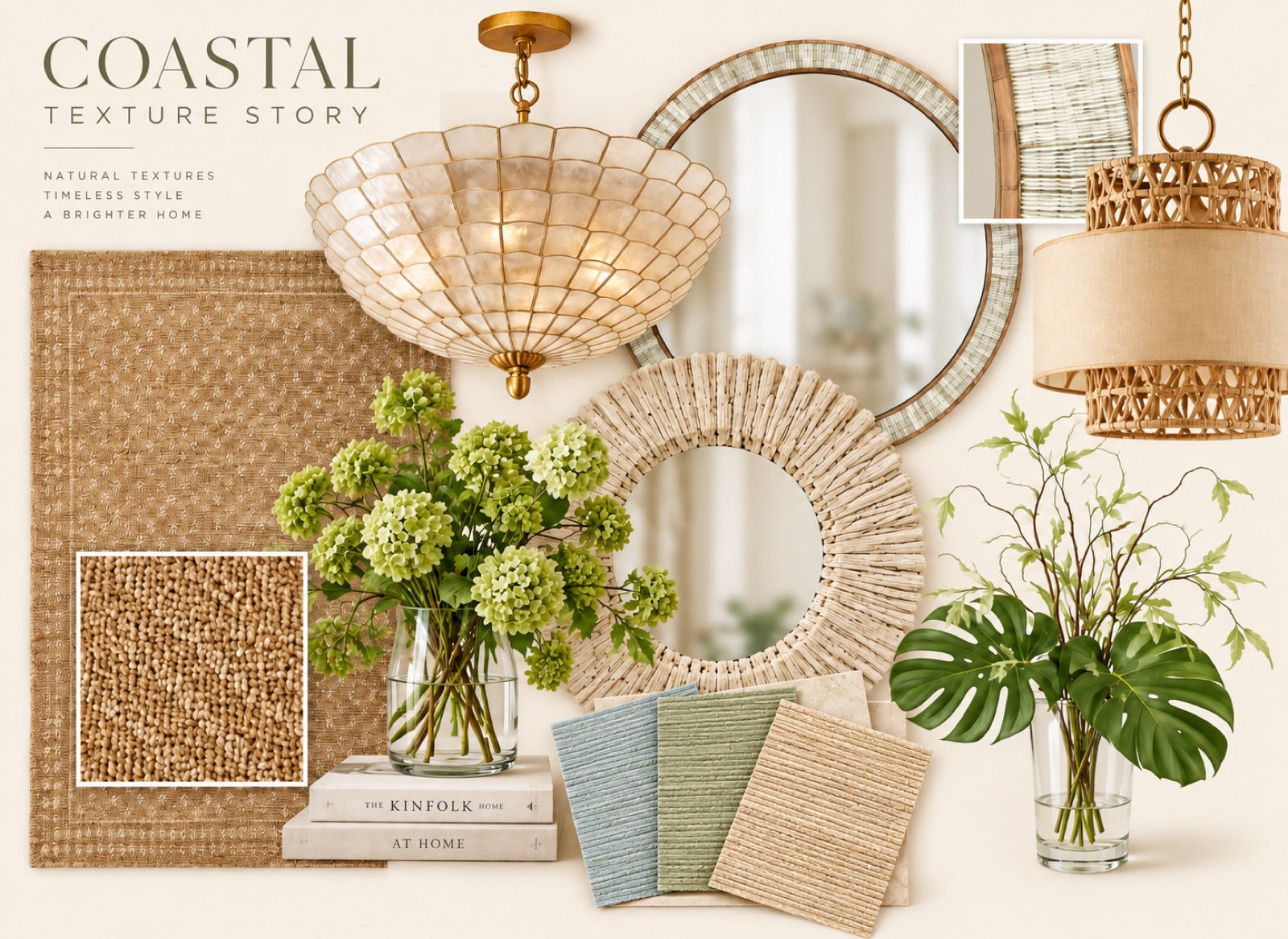
Some of my favorite ways to layer the look include:
Jute and natural fiber rugs
Grasscloth wallpaper
Capiz shell lighting
Rattan and cane furniture
Linen and cotton fabrics
Woven shades
Warm natural woods
Blue and white porcelain
Brass accents
Softly aged or antique furniture
The combination is much more interesting than simply buying a collection of objects labeled "coastal."
Mix New Furniture With Pieces That Feel Collected
Nancy Meyers interiors rarely feel as though an entire room arrived from one furniture showroom on the same afternoon.
There is usually a mix.
A tailored sofa might sit beside an antique side table. A woven chair may be paired with a traditional chest. Books, pottery and artwork soften the newer pieces and keep the room from feeling overly coordinated.
This is one reason antiques work so beautifully in coastal interiors.
An old chest in a foyer, a vintage secretary, an antique sideboard or even a piece converted into a bathroom vanity adds instant character.
The goal is not to make the room look old.
It is to make it look as though it has a history.
Lighting Matters More Than People Realize
Lighting is another opportunity to introduce texture.
Instead of choosing something overtly beachy, look for materials that subtly reference coastal living.
A capiz shell fixture can be elegant and sophisticated. Natural brass adds warmth. Woven fixtures can work beautifully when their scale and construction feel elevated rather than rustic.
Lighting also gives a room another layer of architecture.
A beautiful chandelier in a foyer or dining room draws your eye upward and helps connect the furniture below with the ceiling above.
This is particularly important in homes with taller ceilings, where the middle of the room can otherwise feel visually empty.
Then Come the Final Layers
Once the architecture, furniture and lighting are in place, the final accessories should feel almost effortless.
A stack of books.
A brass bowl.
A chinoiserie pot.
A simple floral arrangement.
Perhaps one or two framed family photographs.
The room does not need twenty accessories to feel complete.
In fact, fewer, larger and more meaningful pieces usually create a more sophisticated result.
This is also where you can add a little more blue or green if the room needs it.
A faded blue rug and a blue and white planter may be enough to make an otherwise neutral foyer feel perfectly at home near the coast.
Why This Look Works So Well in the Lowcountry
The Lowcountry already provides plenty of coastal atmosphere outside the windows.
Marshes, live oaks, waterways, palmettos and changing coastal light give our homes a strong sense of place before we ever begin decorating them.
The interior does not need to compete with that.
Instead, a classic interior with warm whites, beautiful millwork, natural materials and subtle blues and greens allows the surroundings to become part of the design.
That is why this style works equally well in a new Bluffton home, a Hilton Head renovation, a Charleston house or a New England coastal cottage.
The architecture may change from region to region, but the philosophy remains the same.
Classic. Coastal. Timeless.
The best coastal interiors are not defined by how many coastal objects they contain.
They are defined by how they feel.
Relaxed but polished.
Comfortable but sophisticated.
Layered but not cluttered.
And most importantly, timeless.
Start with the architecture. Add beautiful millwork. Choose classic furniture. Introduce coastal materials through texture rather than theme. Then layer in a little blue, some natural greenery, books, brass and pieces you genuinely love.
That is how you create a home that feels completely coastal without ever needing a seashell to prove it.
Classic. Coastal. Timeless.
Exactly the way a coastal home should feel.