
How to Style Bookshelves for a Balanced, Collected Look
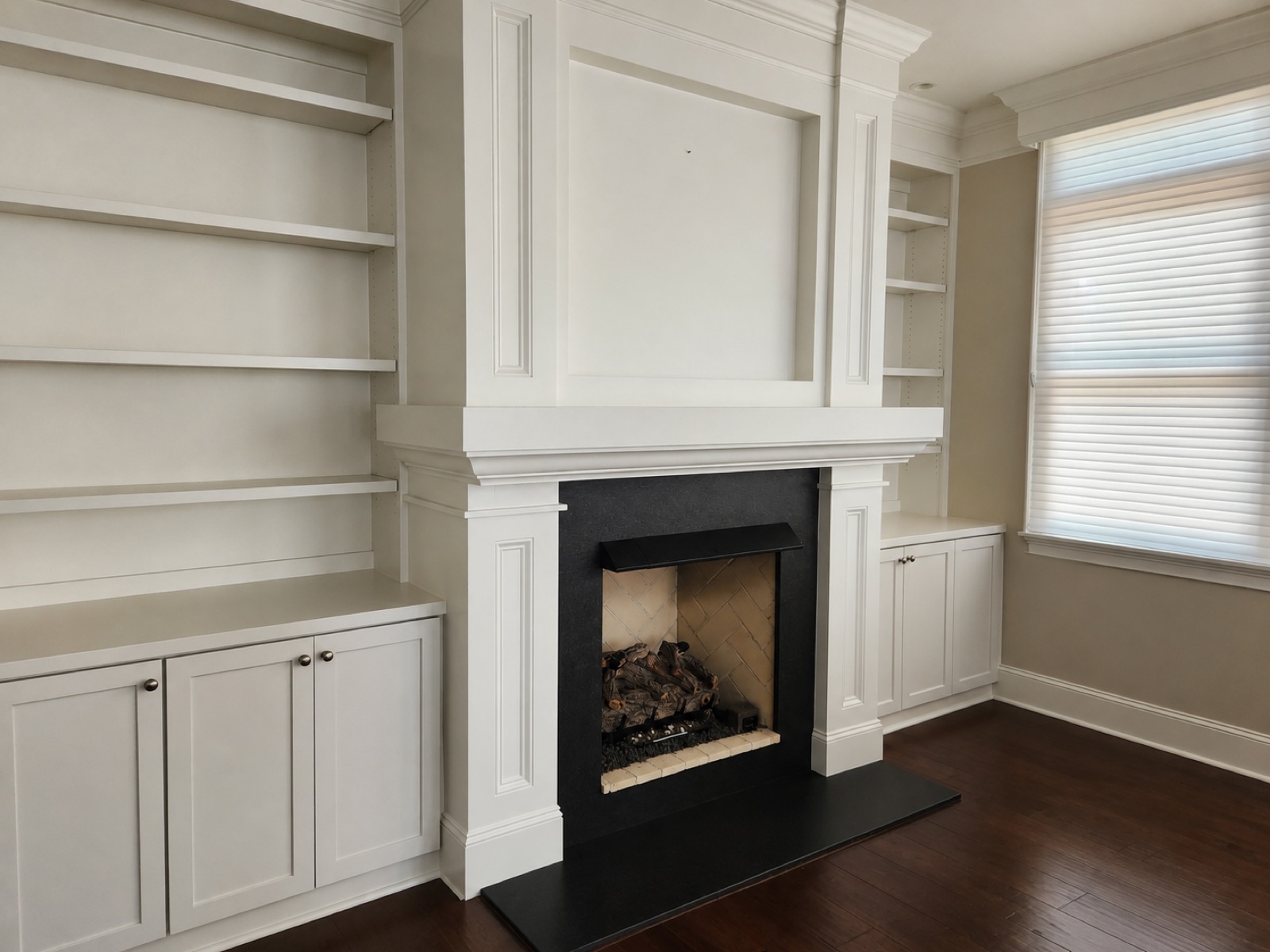
Built-in bookshelves can be one of the most beautiful features in a room, but they can also be surprisingly difficult to style. Too many small accessories can make the shelves feel cluttered, while too few pieces can leave them looking unfinished. The goal is to create a display that feels balanced, personal and thoughtfully collected over time.
Whether you are styling shelves around a fireplace, a freestanding bookcase or a wall of built-ins, these five tips will help you create a polished look without making the space feel overly arranged.
1. Start With Books as the Foundation
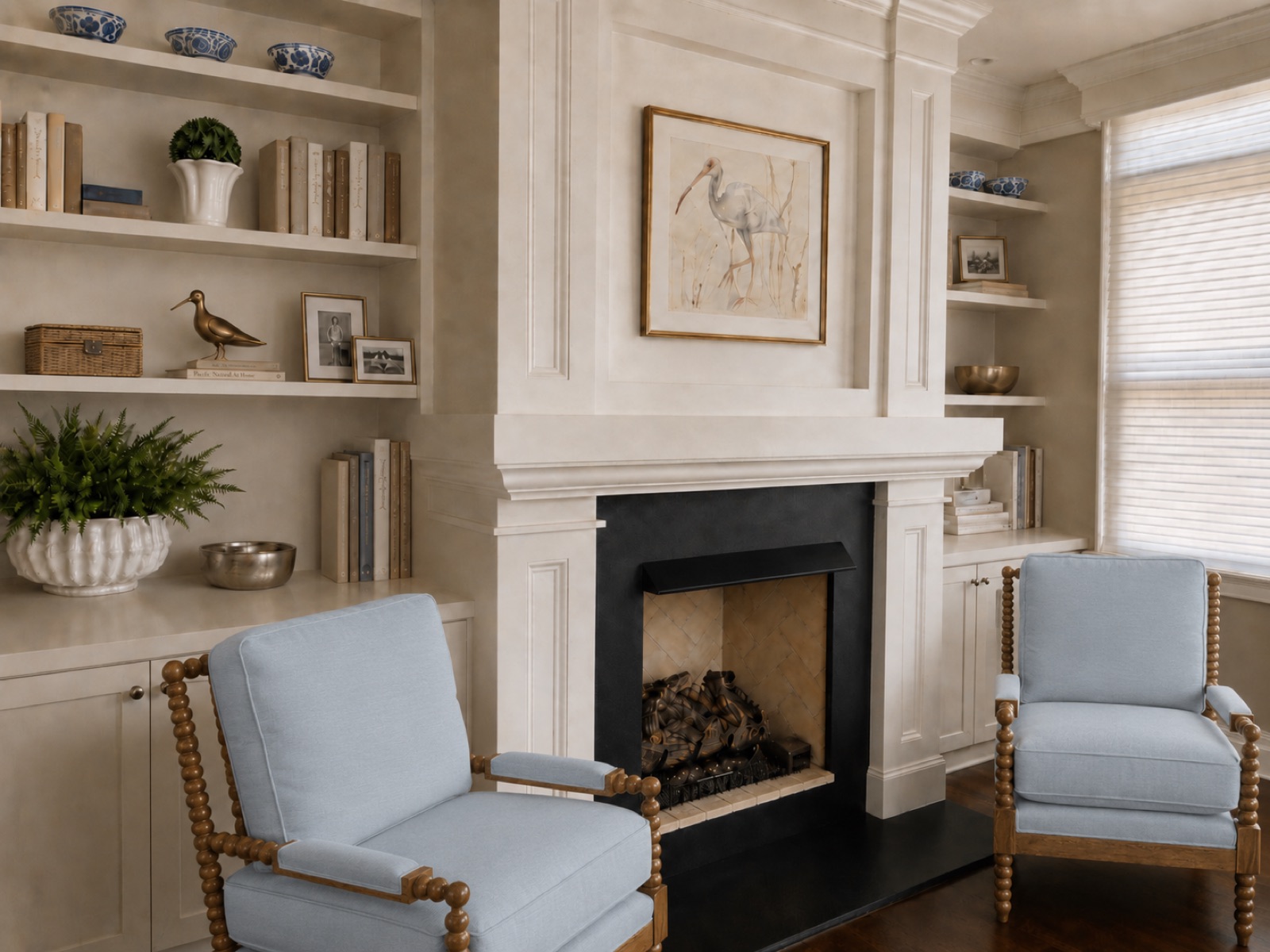
Books are one of the best building blocks for a well-styled bookshelf. They add color, texture and personality while also giving smaller decorative pieces a place to rest.
Begin by placing books throughout the shelves rather than filling one entire section. Use a combination of vertical rows and horizontal stacks to create variety. A small bowl, framed photograph or decorative object can sit on top of a stack of books, adding height and helping the piece feel more substantial.
For a calm, cohesive look, remove brightly colored book jackets or turn a few books around so the neutral page edges face outward. You do not need every book to match, but repeating similar colors throughout the shelves will make the overall arrangement feel more connected.
Books should still feel personal. Travel books, family favorites, gardening books and beautifully illustrated design books all help tell the story of the people who live in the home.
2. Vary Height, Scale and Texture
One of the most common bookshelf-styling mistakes is using too many accessories that are approximately the same size. When every object is small and similar in height, the shelves can begin to feel busy and visually flat.
Instead, mix tall, medium and low pieces. A large vase or piece of framed art can anchor a shelf, while smaller bowls, boxes and objects fill in the surrounding space. The larger items give the eye a place to rest and prevent the display from looking like a row of small knickknacks.
Texture is equally important. Combine smooth ceramics with woven baskets, aged brass, glass, wood and greenery. A rattan box placed beside a brass bird or a white ceramic planter paired with vintage books creates more interest than several objects made from the same material.
Scale matters, too. Built-in shelves, especially those surrounding a large fireplace, often need more substantial pieces than you might expect. One larger planter or vase will usually have more visual impact than several tiny accessories.
3. Mix Art, Greenery and Collected Objects
The most memorable bookshelves include a thoughtful mix of artwork, natural elements and personal objects. These pieces give the shelves character and keep them from feeling like a furniture showroom display.
Small framed photographs and artwork can be leaned against the back of a shelf or placed on top of books. Greenery adds life and softness, particularly when surrounded by hard surfaces such as cabinetry, books and metal accessories. A small fern, topiary or leafy branch can provide just enough color to make the entire arrangement feel fresher.
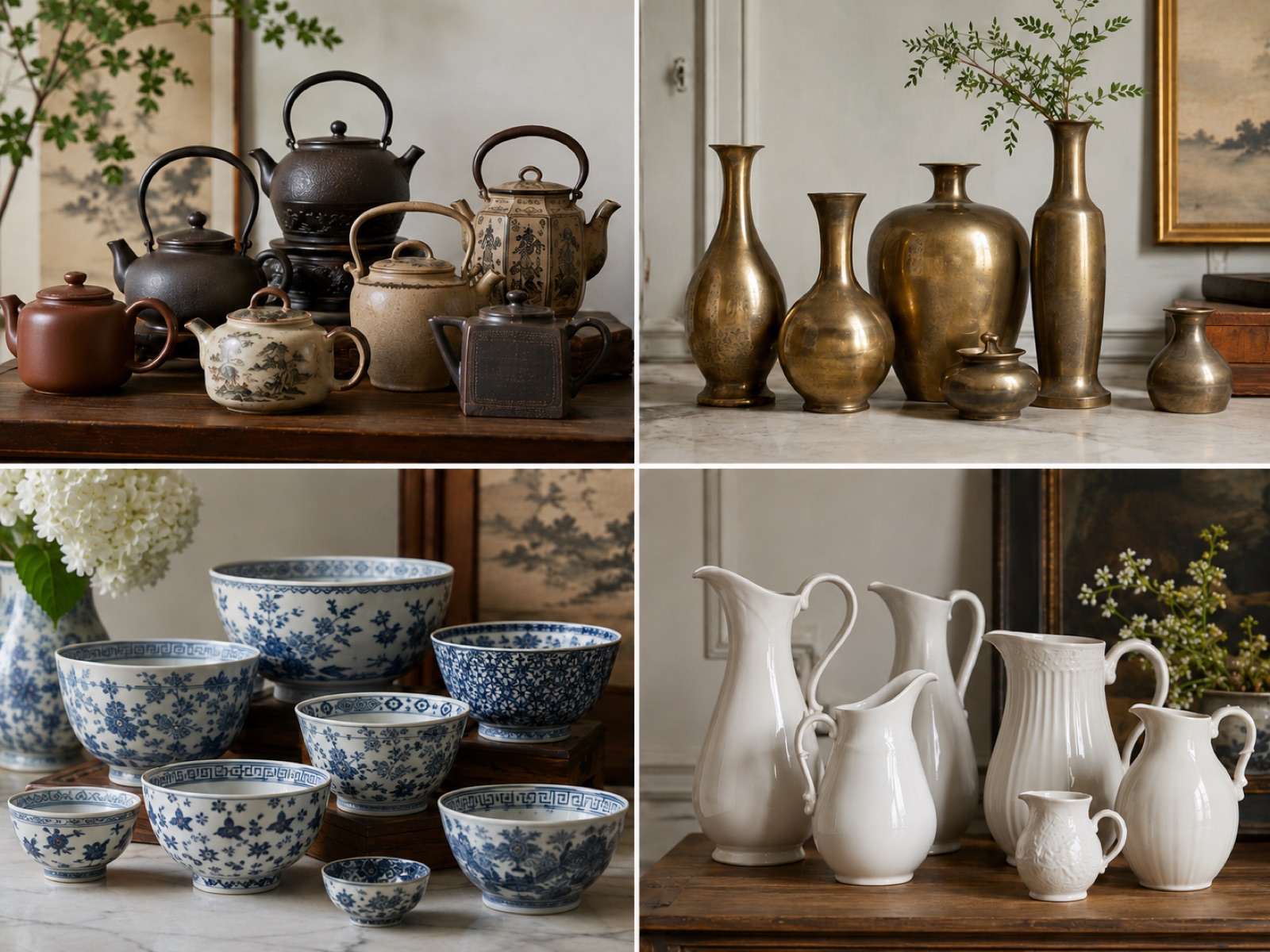
Collections are especially effective on built-ins positioned to the left and right of a fireplace. Consider placing a collection across the upper one or two shelves on both sides. Chinese teapots, brass vases, blue-and-white chinoiserie bowls or white ceramic pitchers are all beautiful options.
Repeating similar objects on both sides immediately makes the arrangement feel intentional. The pieces do not need to match exactly; in fact, a collection is often more interesting when the items vary slightly in size, shape and age. The repetition creates symmetry, while the differences keep the display from feeling too formal.
This is also a wonderful way to bring storytelling into the room. A collection gathered during your travels, inherited from family members or discovered over time at antique markets carries far more meaning than a group of accessories purchased all at once. These objects give guests a glimpse into where you have been, what you love and how your home has evolved.
Starting with a collection on the upper shelves also makes the rest of the styling process easier. Once those larger visual anchors are in place, you can work downward with books, framed photos, greenery and other decorative objects.
4. Group Items in Odd Numbers
Decorative objects often look more natural when arranged in groups of three or five. Odd-numbered groupings allow the eye to move through the arrangement and tend to feel less rigid than pairs.
A simple grouping might include a small framed photograph, a brass object and a stack of books. Another shelf could feature a ceramic bowl, a vase and a woven box. The objects do not need to be closely clustered together, but they should feel connected by color, scale or material.
Not every shelf needs three items, and you do not have to follow the rule mechanically. The goal is simply to avoid lining up accessories in evenly spaced rows. Slightly overlapping pieces and varying their placement will create a more relaxed, layered appearance.
When working with built-ins on both sides of a fireplace, balance the visual weight rather than trying to mirror every shelf exactly. A large plant on the left might be balanced by a grouping of books and a substantial bowl on the right. The two sides should feel related without appearing identical.
5. Leave Open Space So the Shelves Can Breathe
It can be tempting to fill every shelf, especially when you have a large collection of books and accessories. However, open space is an important part of the design.
Leaving a portion of each shelf visible allows the individual objects to stand out. It also gives the entire display a lighter, more sophisticated feeling. A shelf with one beautiful vase and a small stack of books can be more impactful than a shelf filled from end to end.
Step back frequently as you work. Bookshelves should be viewed as one large composition rather than a series of individual shelves. Look for areas that feel overly heavy, crowded or repetitive. Removing one or two pieces is often the final step that makes the arrangement feel finished.
Creating a Coastal Look Without the Coastal Clichés
Coastal style can be beautiful, calm and timeless, but it is easy to overdo the theme. Try not to fill the shelves with too many items that immediately announce “coastal,” such as word signs, seashell-covered accessories, anchors or brightly painted beach décor. When too many literal coastal pieces are used together, the room can quickly feel themed rather than collected.
A more elevated coastal feeling can be created through color, texture and natural materials. Look to the shades found in sand, sea and sky: soft ivory, weathered beige, pale blue, muted navy and watery green. Add fresh greenery for warmth and life, then incorporate woven textures through rattan boxes, wicker baskets or natural-fiber accessories.
Blue-and-white ceramics, aged brass, white pottery, driftwood tones and vintage books can all suggest coastal living without feeling overly obvious. The result is a room that feels connected to its surroundings while still remaining classic and personal.
Let Your Shelves Tell Your Story
The best bookshelves are not perfectly matched or filled with accessories purchased in a single afternoon. They evolve over time through books you have read, photographs you treasure, objects you have collected and pieces that simply make you happy.
Start with a few strong foundations, vary the scale and texture, repeat meaningful collections and leave enough open space for each item to be appreciated. With a thoughtful approach, your bookshelves can become one of the most personal and beautiful features in your home.
Need help creating a balanced, collected look in your home? Bluff & Bay Interiors offers interior design, styling and sourcing services throughout Bluffton, Hilton Head, Beaufort and Savannah.