
50 Shades of Beige: How to Choose the Best Neutral Upholstery Fabric
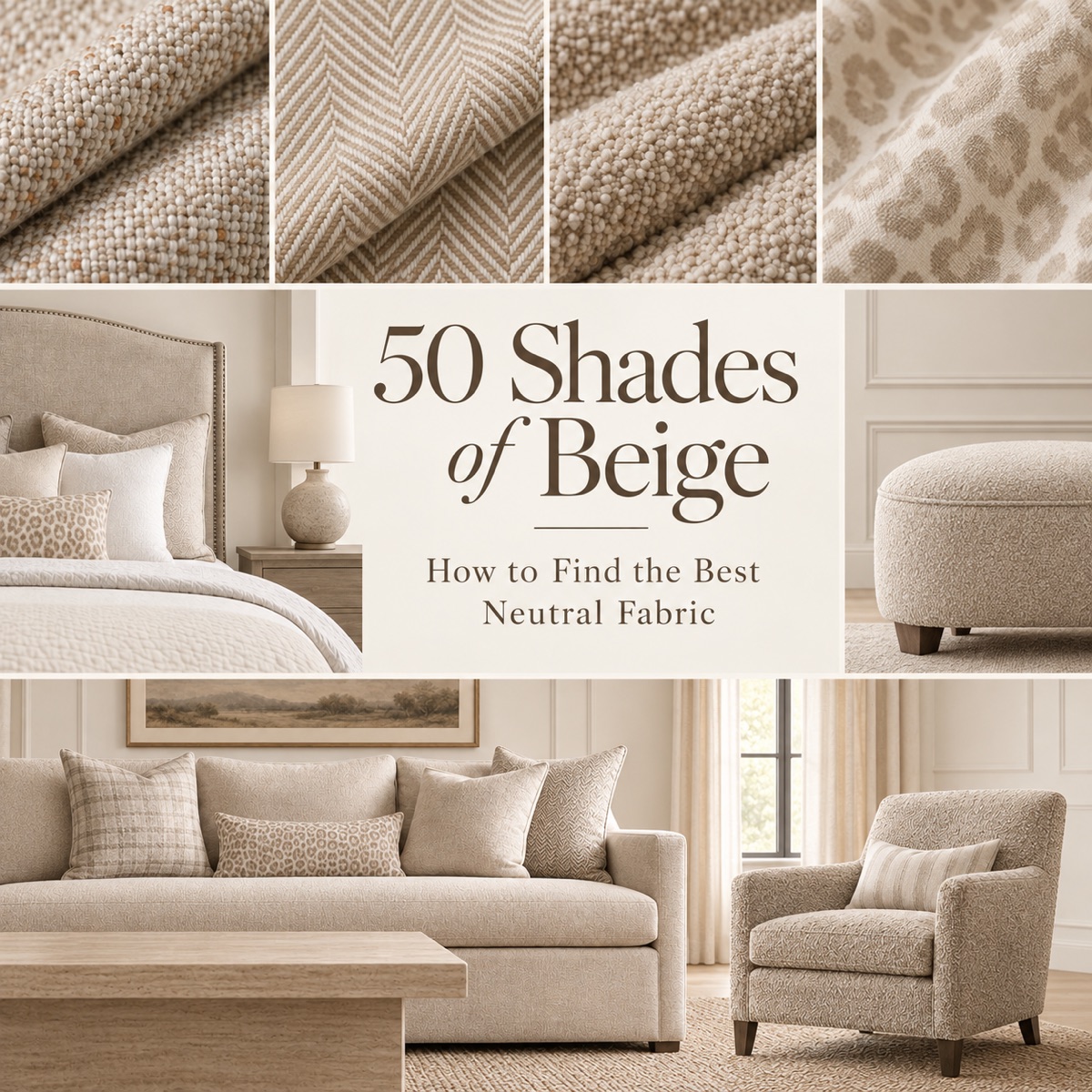
You would think choosing a beige sofa would be easy. Then someone hands you a wall of fabric samples and you realize there are approximately 50 shades of beige. Ivory. Cream. Oatmeal. Linen. Sand. Natural. Flax. Mushroom. Putty. Stone. And somehow they all look completely different once you put them in a room.
When I worked at Bassett and Ethan Allen, I spent a lot of time helping clients narrow hundreds of fabric choices down to the handful that would actually work for their furniture, their lifestyle and their home. The good news is that you don't have to look at every beige fabric in the store. Once you answer a few questions, you can eliminate most of them pretty quickly.
First: Where Is the Furniture Going?
One of the first things I consider is whether the piece will sit against a wall or float in the room.
If you're upholstering a sofa that will sit directly against an off-white or beige wall, the relationship between the upholstery and the paint color matters. You generally want enough contrast that the sofa doesn't disappear into the wall or, worse, look like you tried to match the two and missed. Put an ivory sofa against an ivory wall and one may suddenly make the other look yellow, gray, pink or dingy. Beige is especially tricky because the undertones can be surprisingly different.
If the sofa is floating in the center of the room, that wall-to-fabric contrast isn't nearly as important. Now I am more concerned with how the fabric relates to the rug, chairs, window treatments and other furnishings.
This is why I always like to see neutral fabric samples in the actual room whenever possible. Artificial showroom lighting can be very different from the natural light in your home. And don't just look at the sample lying flat on a table. Hold it vertically where the sofa back will be, then horizontally where the seat cushions will be. Light hits the two surfaces differently.
Performance Fabric Has Changed the Beige Sofa Game
A light-colored sofa used to make many people nervous, particularly if they had children, pets or a husband holding a glass of Cabernet. Today's performance fabrics are a very different story.
Did you know that many performance fabrics are designed to withstand spills like red wine? I know because I have personally tested dozens of them. When I worked at Bassett and Ethan Allen, I regularly brought fabric samples home and poured red wine on them to see what would happen. I'm not entirely sure my husband appreciated me using our wine for upholstery research, but it was surprisingly educational.
With many performance fabrics, a little mild detergent and water can remove everyday spills. Crypton, for example, specifically lists red wine among the stains that can typically be spot cleaned and recommends a mild cleaning solution that can include Dawn dishwashing liquid. Many liquids can also be blotted from the surface before they penetrate deeply into the upholstery.
Revolution Performance Fabrics work a little differently. Their fabrics are made from solution-dyed olefin, which is inherently resistant to water-based staining, and the company provides cleaning instructions that even allow a diluted bleach-and-water solution for stubborn stains.
The important thing to remember is that "performance fabric" is a category, not one universal technology. Different manufacturers achieve stain resistance in different ways, and cleaning instructions vary. Always check the specific fabric's care instructions before attacking a stain with whatever happens to be under your kitchen sink.
Soft and Cozy or Crisp and Tailored?
Here's another question I ask clients: How do you want your furniture to look after you've actually sat on it?
In general, very soft, supple fabrics tend to show more comfort wrinkles, cushion impressions and movement. That's not necessarily a negative. In fact, that relaxed appearance can be beautiful in a casual coastal home. But some clients want their sofa to look perfectly tailored every time they walk into the room. For them, I may lean toward a slightly firmer, more structured upholstery fabric.
There is usually a trade-off. The softer option may feel wonderful but require a little fluffing and smoothing. The stiffer fabric may hold its shape beautifully but not feel quite as luxurious. Neither is right or wrong. You just need to know which matters more to you.
Have Pets? Look at the Weave
Pet owners should pay particular attention to texture. I love a beautiful nubby fabric or bouclé, but those larger loops and irregular yarns can be tempting targets for claws. A dog's nail can catch in the weave and pull a thread surprisingly quickly.
For heavily used upholstery in a house with pets, I usually lean toward a tighter weave with fewer pronounced loops. That doesn't mean you have to choose something flat or boring. There are some beautiful performance fabrics with subtle texture, tiny flecks of color and enough variation to be interesting without having large loops for claws to catch.
And don't get too mesmerized by an enormous "double rub" number on the tag. Abrasion testing can be useful, but textile industry guidance cautions that extremely high abrasion-test numbers aren't necessarily a predictor of how long a fabric will last. Cleaning, maintenance, construction and how the furniture is actually used matter too.
Why I Almost Always Prefer a Little Flecking
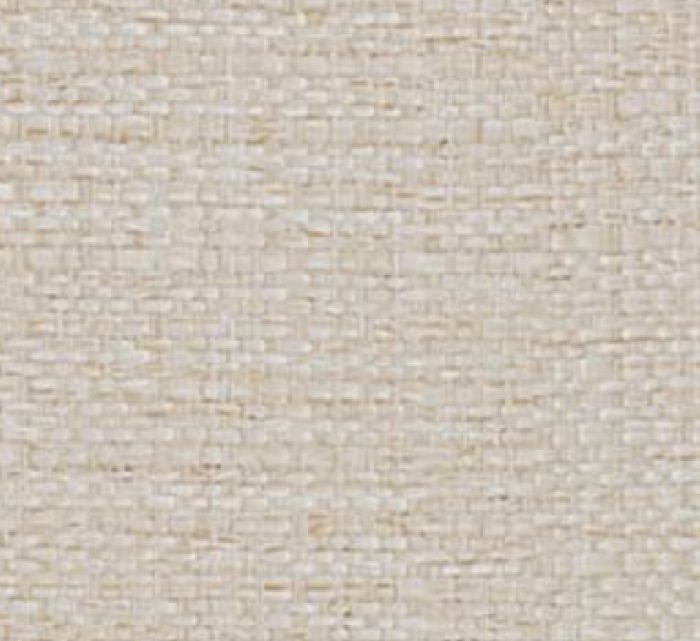
When I am choosing a neutral upholstery fabric, I almost always gravitate toward one with a little variation in the yarn. Instead of one completely flat beige color, look closely for a fabric with tiny threads of ivory, taupe, camel, gray or gold woven through it.
It gives the fabric dimension. More importantly, it is incredibly forgiving. A completely solid cream fabric can show every tiny crumb, hair and spot. A lightly flecked or heathered fabric naturally disguises some of the little things that happen in real life.
It also makes decorating easier because you're no longer trying to match one exact shade of beige. If your upholstery contains ivory, oatmeal and a touch of camel, suddenly it can work with several different neutrals throughout the room.
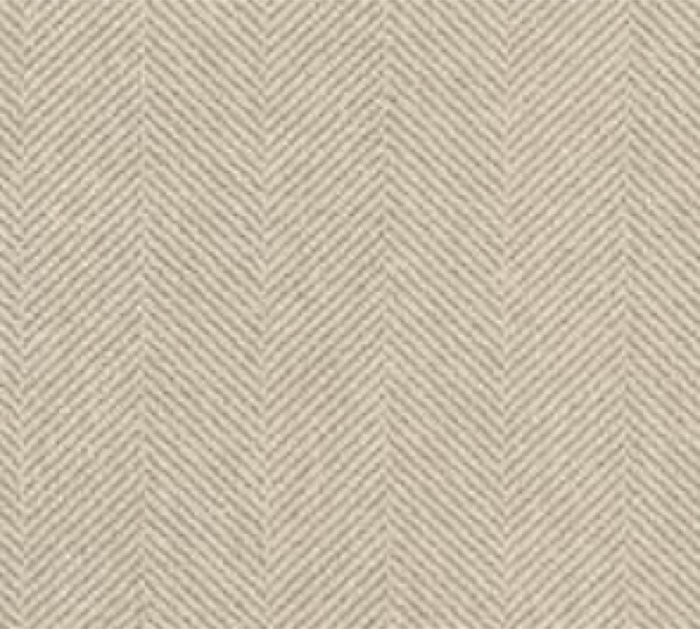
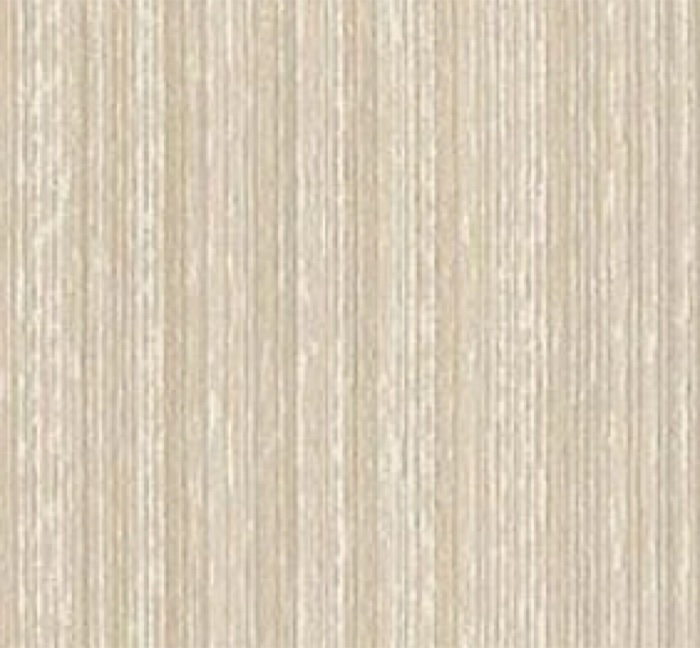
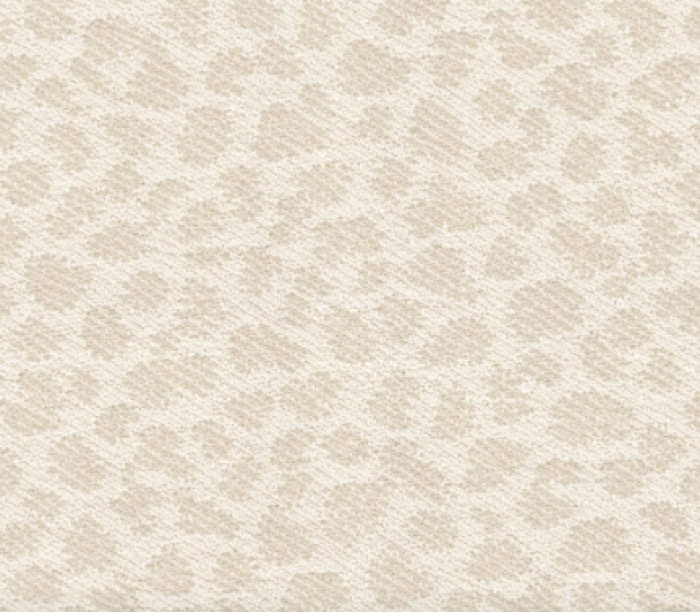
These are good examples of what I mean. The first has subtle flecking and variation of color. The others show how a neutral can still have interest through herringbone, a soft stripe or even a subtle animal print.
My Own Headboard Is a Good Example
My headboard is upholstered in Seneca Oatmeal from Ethan Allen, an indoor/outdoor performance fabric. It is technically categorized by Ethan Allen as an outdoor performance fabric, is rated for heavy use and is stain protected.
What I particularly like about it, though, is the color. It isn't just "beige." It has ivory and lighter flecks mixed with incredibly subtle warmer brown and gold tones. That means I can use crisp white bedding, warmer ivory bedding, camel accents or other neutrals without the headboard fighting with them.
It has enough texture to feel interesting but remains neutral enough that I can completely change the look of the room with bedding and pillows. That's what I want from a good neutral fabric. Neutral should give you flexibility, not box you into one color palette.
Beige Doesn't Mean Boring
This is probably my biggest complaint about the phrase "neutral upholstery." People immediately picture a completely plain beige sofa. Neutral can still have personality.
Consider a subtle beige and ivory herringbone. A tiny check. A woven stripe. A tonal geometric. A tweed-like blend. A faint animal pattern. I actually have chairs upholstered in a very subtle beige-and-white animal print. From across the room they essentially read as neutral chairs. When you get closer, there's something interesting happening.
That's often my favorite way to use pattern. You don't necessarily need a giant leopard-print sofa to make a statement. A tonal animal print can give you movement and personality without taking over the room.
Don't Let Fabric Grades Confuse You
Another quick way to narrow down the wall of samples is price. Furniture manufacturers often organize fabrics into grades, sometimes beginning with A and going all the way through the alphabet. Once you've established your budget, you may immediately eliminate several sections of the fabric rack.
But here's something worth knowing: a higher fabric grade doesn't automatically mean a more durable fabric. Fabric grades are generally pricing categories. Price may reflect the mill, fiber content, pattern complexity, construction, finishing process or cost to manufacture. A lower-priced performance fabric may actually be a much more practical choice for a family-room sectional than a beautiful, expensive decorative textile.
This is one of the reasons it helps to tell your designer what matters to you before you start pulling samples.
My Neutral Fabric Checklist
Before looking at hundreds of swatches, I narrow the search by answering six questions:
- Is the furniture against a wall or floating in the room? If it's against a neutral wall, undertone and contrast become especially important.
- Does it need to be performance fabric? For everyday sofas, breakfast chairs and homes with pets or grandchildren, my answer is frequently yes.
- Do you want soft and relaxed or crisp and tailored? Your answer will help determine texture and construction.
- Are there pets? If so, consider tighter weaves rather than heavily looped or nubby fabrics.
- Do you prefer a solid or subtle pattern? Flecking, herringbone and tonal patterns are great ways to make beige more interesting and forgiving.
- What's the budget? Give the designer a price range before she pulls 30 gorgeous fabrics you don't want to pay for.
Once you've answered those questions, those 200 ivory and beige samples suddenly aren't quite so intimidating. You may only need to look at ten.
The Best Neutral Isn't Necessarily the Prettiest Swatch
One final thought: don't choose upholstery fabric based solely on which four-inch sample you like best. The best neutral fabric is the one that works with your room and the way you live.
It should complement your paint color. Feel good when you sit on it. Stand up to the people and pets using it. Work within your budget. Give you flexibility when you want to change pillows or rugs five years from now. And ideally, it should survive an occasional glass of red wine.
Because beige furniture shouldn't require you to drink white.
Let's Find Yours Together
If you are building or furnishing a home in the Lowcountry and feeling buried under a wall of beige samples, that is exactly the kind of decision I love helping with. Bluff & Bay Interiors offers interior design, styling and sourcing throughout Bluffton, Hilton Head, Beaufort, Savannah and the surrounding Lowcountry.